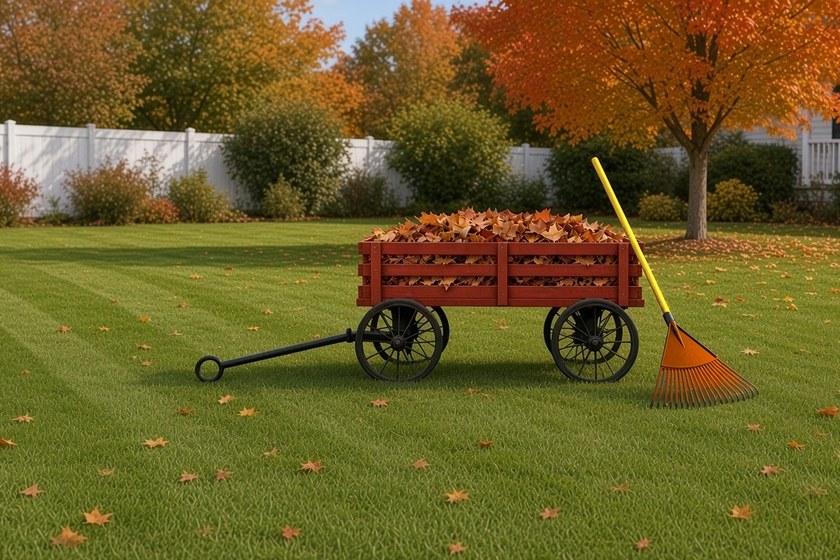





































A thin lawn in the Mid-South can still look tended this fall. You are about to dump a bag of turf-type tall fescue on a warm October weekend and hope for a miracle. UT Hort Welcome Home Week 4 puts the best cool-season seed window in fall, not in late October rescue mode. UT PB1903 lists aerate and overseed under August for tall fescue; October is fertilize per soil test, winter weeds, mow and mulch leaves, and irrigate on drought stress. Plan B: protect the lawn you have, then queue the next real establishment window.
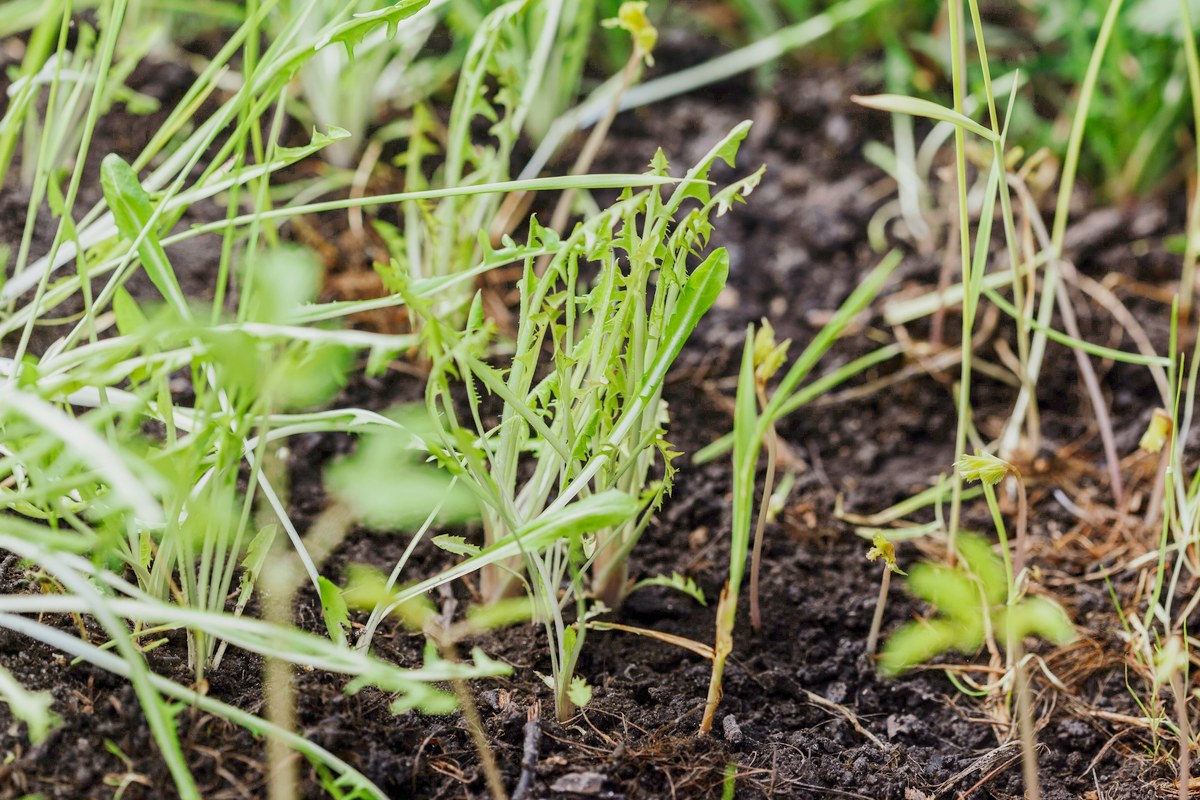
The fall window closes for a reason
Fall seeding beats spring for tall fescue because soil warmth and cooler air favor establishment before summer heat. UT describes regional windows, not one Mid-South calendar day: Cumberland Plateau roughly mid-August to mid or late September; Murfreesboro or Knoxville mid-September to mid-October; even later in West Tennessee depending on weather.
This piece is only the missed overseed path. For Bermuda vs fescue October chores, start with Fall Lawn Care Basics.
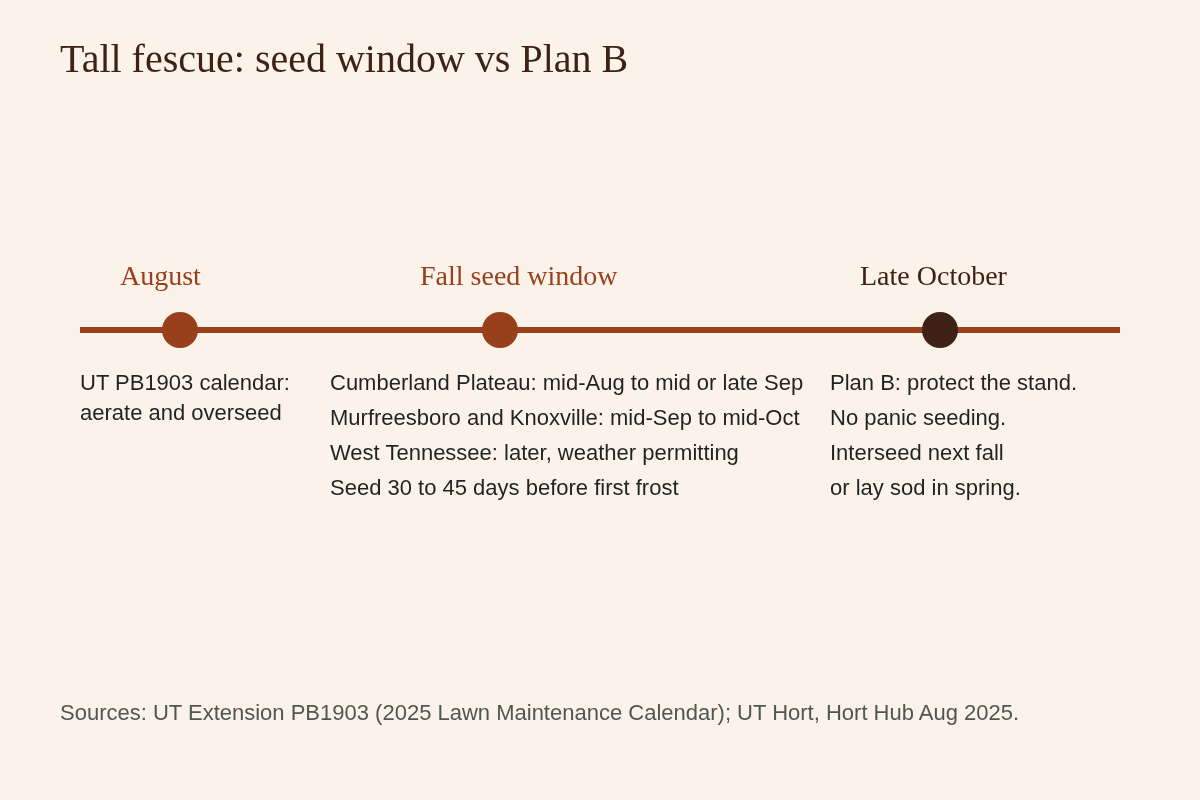
Plan B: protect, do not force seed
Warm-season readers in Fairhope and along the Gulf Coast: brown bermuda in fall is often dormancy, not a seed emergency. See the basics guide before you buy cool-season seed.
For tall fescue in Germantown, Collierville, Franklin, Brentwood, Belle Meade, Mountain Brook, and Madison:
- Confirm you have tall fescue clumps, not dormant bermuda runners (grass ID in the basics guide).
- If your regional window has passed, skip panic seeding. Buy a turf-type tall fescue blend from a local garden center or co-op for next fall, not for this weekend.
- Mow by the one-third rule and mulch leaves while mowing when grass shows (PB1903).
- Irrigate only on drought-stress cues (rolled leaves and lingering footprints), not on autopilot (PB1903; ANR-0239).
- Soil-test and fertilize per Extension recommendations for October tall fescue.
- Winter annual weeds: treat only with a product whose label allows use on your grass type. Read and follow the label. It is federal law (FIFRA).

Next real fix: fall interseed or spring sod
When thinning is severe, UT’s interseed guidance still assumes timing inside a real fall window or a renovation plan, not a single warm October afternoon. Queue aeration and overseed for next August and September, or plan spring sod if you must establish cool-season grass in spring; spring seed often struggles before summer (UT Hort).
Planning context: seeding about 30 to 45 days before average first frost is a useful anchor when you are inside the window (UT Hort Hub, August 2025 PDF). It is not a promise that mid-October seeding will establish everywhere in the Mid-South.

Curb appeal while you wait
Beds carry the block when the lawn is between plans. Refresh ornamental mulch, edge foundation lines, and handle early leaf drop without burning (drought leaves guide; mulch beds for winter curb). Hiring renovation? Ask for insurance before crews start (COI guide).

This weekend
- Name your grass: tall fescue Plan B vs warm-season dormancy.
- Put the seed bag away if your window has passed.
- Mow, mulch light leaves, and water on stress cues only.
- Order a soil test if you have not run one in three years.
- Add missed fescue Plan B on your YardSeasons calendar.
Next: Mulch Mid-South Beds Now for Winter Curb. Related: Drought Dropped Leaves Early: Now What, Fall Lawn Care Basics, and Leaves: Mulch or Rake.