





































This is general information, not legal or insurance advice. Rules vary by state and situation; check with an attorney or your insurance agent.
Before the first visit, ask any firm you pay to work on your Mid-South property for certificates of insurance, including proof of workers’ compensation when that firm must carry it. No certificate in hand means no start date.
Why the certificate comes first
For example, imagine you hire a crew to trim the shrubs and a worker seriously injures a hand on your property (hypothetical). Here’s why the ask matters: if someone you pay is hurt on your property and the firm has no coverage, you could face questions, and possibly a claim, depending on the facts and your insurance. Ask your insurer or an attorney what that means for your situation.

Insurance Information Institute guidance for households that contract through a firm: ask for a copy of the firm’s certificates of insurance documenting that the firm provides workers’ compensation for its employees.
What you are asking for
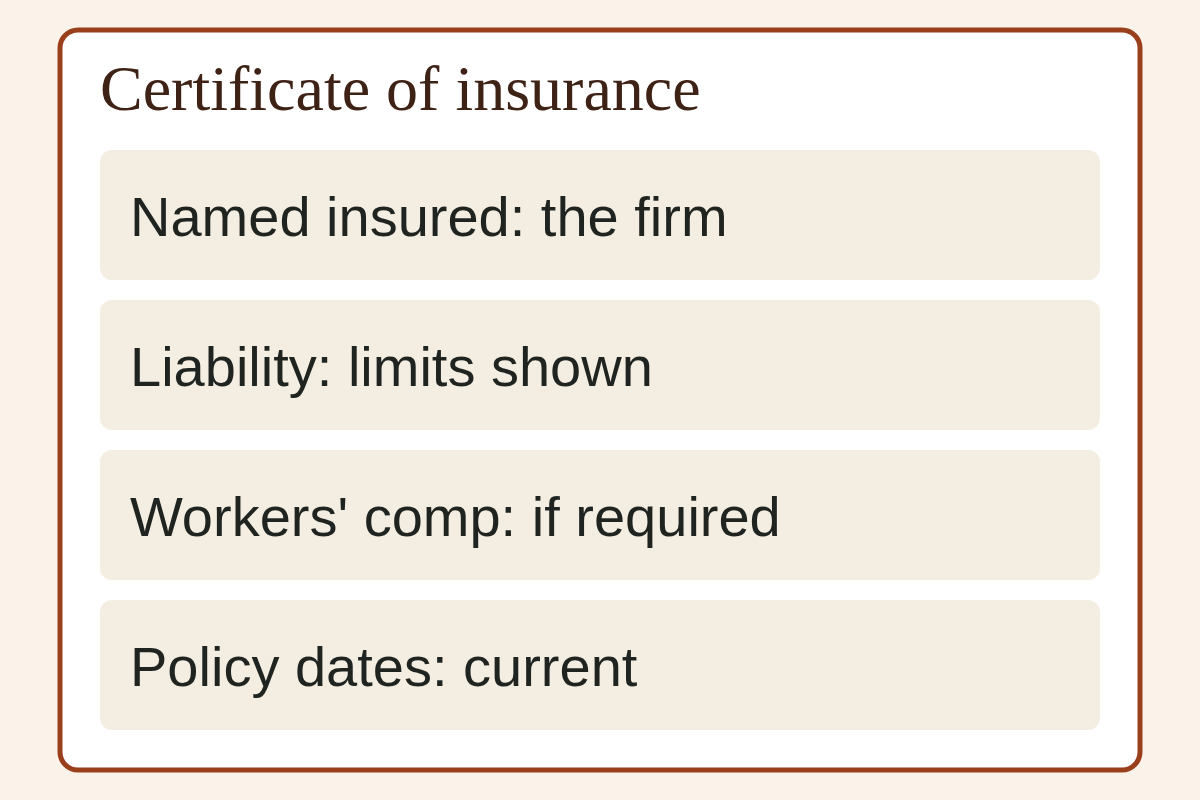
A certificate of insurance is paperwork from the firm’s insurer that shows coverage types and limits as of a date. Ask for certificates that show liability coverage and workers’ compensation when the firm employs people. Do not accept “we’re insured” over the phone.
A rock thrown by a string trimmer can crack a window; that is one reason liability proof matters before work starts. Workers’ compensation is separate: it is the coverage employers use for on-the-job injuries to their people.

Who usually carries workers’ compensation
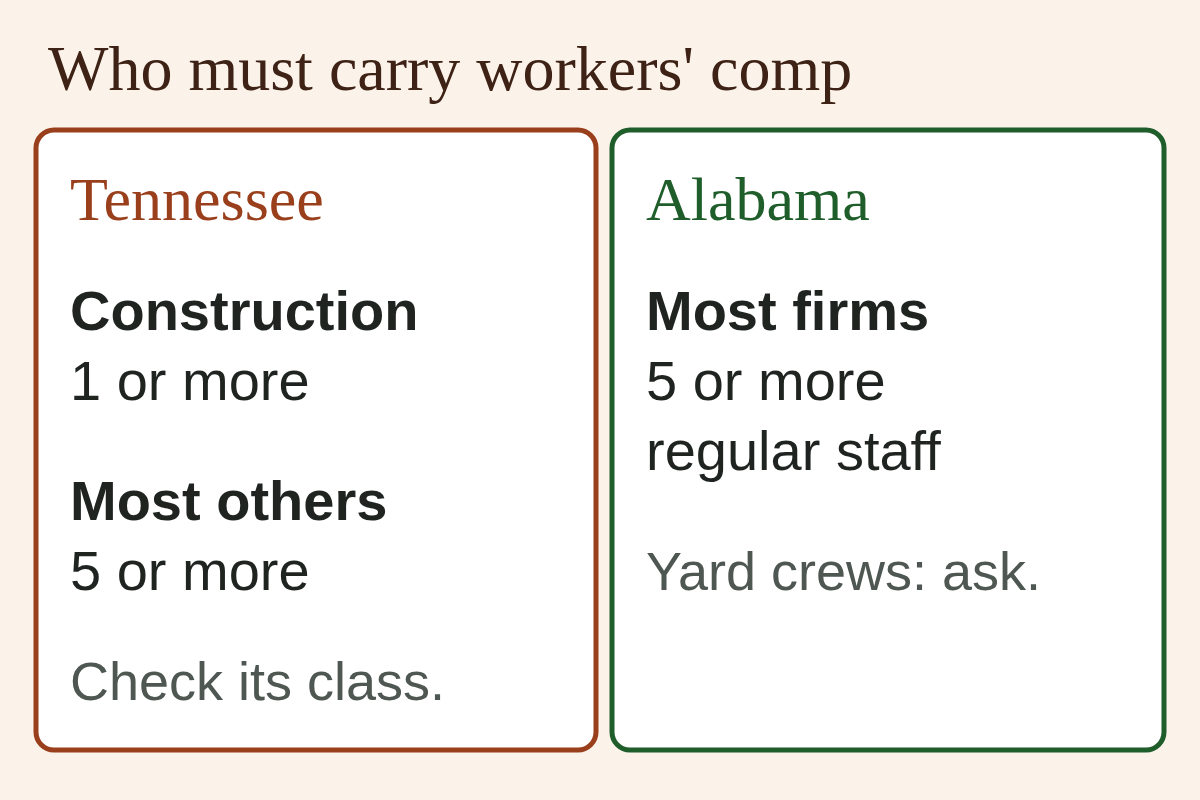
In Tennessee and Alabama, a homeowner who hires a yard company usually isn’t that company’s workers’-comp “employer.” The company is. But if someone is hurt on your property and the company has no coverage, you could still face questions, and possibly a claim, depending on the facts and your insurance. That’s why you ask for the certificate first.
Tennessee: construction businesses must cover even one employee; most other businesses must carry coverage at five or more employees (Tennessee Department of Labor and Workforce Development; employer responsibilities). Whether a landscaping or tree company counts as “construction” depends on the classification. Just ask for the certificate; do not assume.
Alabama: a business that regularly employs five or more employees (full- or part-time, including officers) generally must carry workers’ compensation; smaller counts are often outside the mandate except for on-site work building new single-family detached houses (Alabama Department of Labor; ADOL FAQ). Ordinary yard work is not that new-house exception.
Workers’ compensation can cover medical care, part of lost wages and, in some cases, retraining. These benefits come through the employer’s insurance.
What your own policy may cover
Review the medical-payments and liability parts of your homeowners coverage with your agent (III on household help; III on how much coverage). Different policy types answer different questions: homeowners liability is not the same as a firm’s workers’ compensation. Whether your homeowner’s policy covers an injured worker varies by policy; ask your agent.
If you hire permanent household help yourself, ask your agent how your state and your policy treat that hire compared with a contracted firm.

One ask before they unload
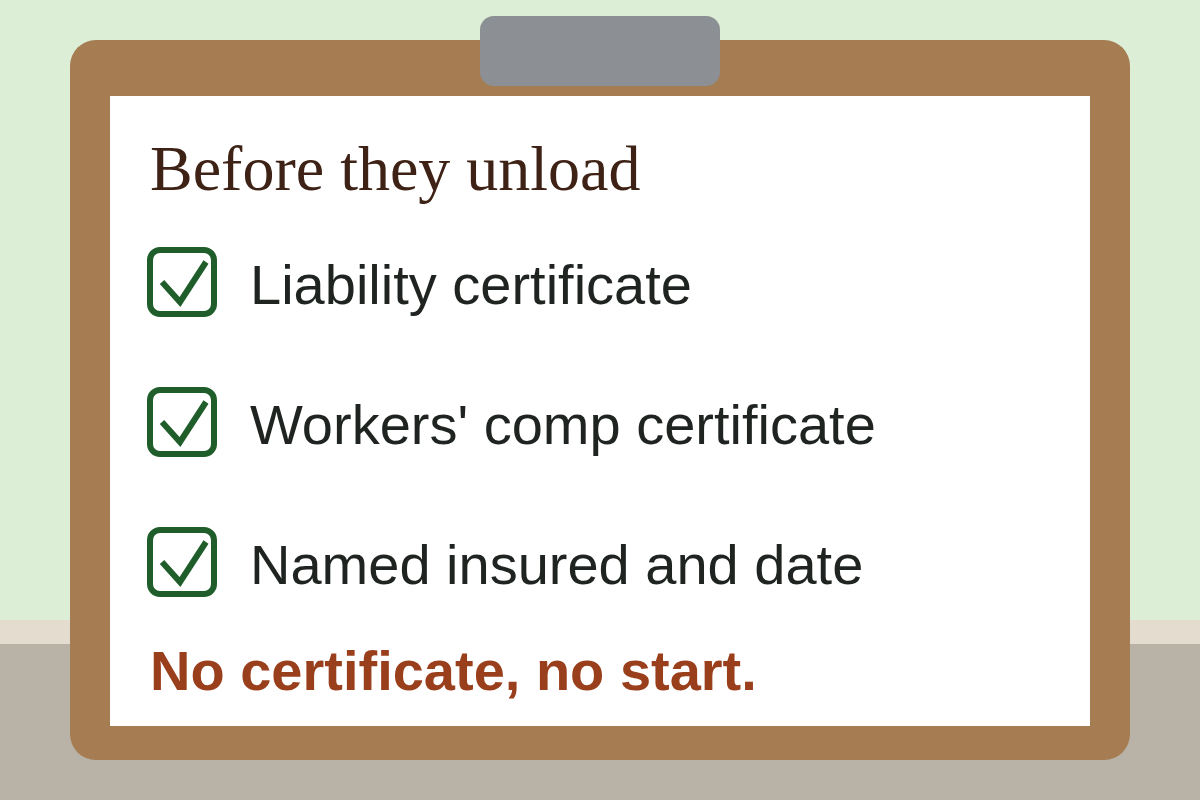
Ask for all of this in writing, once:
- A current certificate of insurance showing liability coverage.
- A current certificate of insurance showing workers’ compensation when the firm has employees.
- The named insured and the date on the certificate, not a verbal promise.
No certificate, no start. If the packet looks thin, pause and call your insurance agent before anyone plugs in a trimmer.
Ask once, then keep the papers
Ask for certificates of insurance, including workers’ compensation when the firm must carry it, before anyone you pay works on your Germantown entry, Franklin patio, or any Mid-South property you own. If coverage is missing, you could face questions, and possibly a claim, depending on the facts and your insurance. Keep the certificates with your other home files, and send the same ask to the next firm you interview.
Put the certificate ask on your fall list.
Next: Lawn Crew, No Spreader? Half a Service: read the truck, then get the certificates before the first cut.
This is general information, not legal or insurance advice. Rules vary by state and situation; check with an attorney or your insurance agent.