




































You are about to leave those new-build beds as bare clay rings all winter in the Mid-South, and the curb will look unfinished on every drive-by. Alabama Extension ANR-0385 says mulch conserves moisture, suppresses weeds, and buffers winter freeze-thaw around roots. This is ornamental bed mulch for curb appeal, not the mow leaves into the lawn method. Edge the bed, keep mulch off crowns and trunks, and lay the depth that fits your material, not a volcano at the stem.
Bare rings read as unfinished
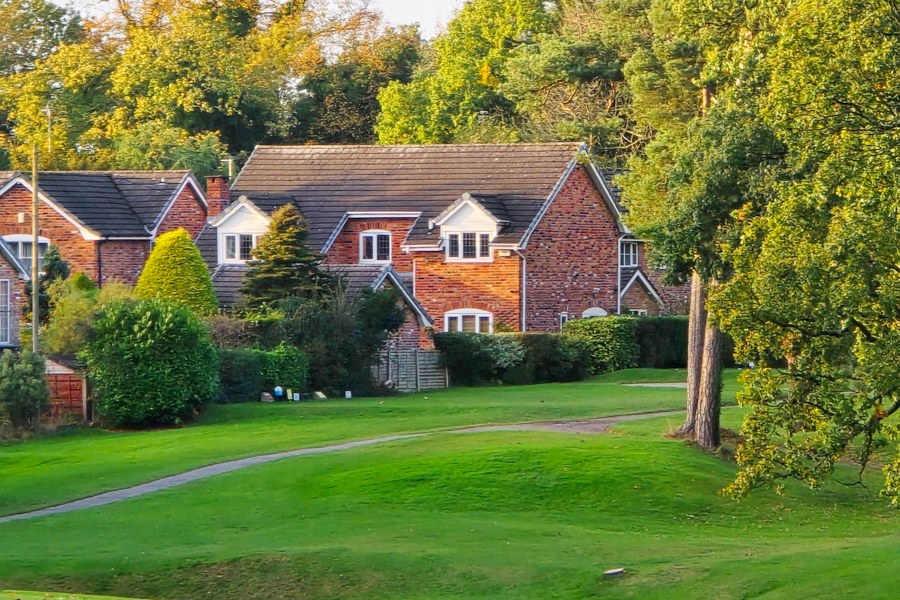
New construction in Williamson County, Germantown, Collierville, Madison, Mountain Brook, and Fairhope often leaves skinny foundation beds with exposed clay. Drivers notice the ring before they notice the roofline. Even color from fall planters sits sharper when the bed surface looks intentional.
Finish before your area’s hard-freeze dates; frozen mornings make edging miserable.
In your area: zone and hard-freeze timing
Bed work is easier before repeated hard-freeze mornings. For Franklin and Brentwood, UT Extension’s Nashville station lists a 10% plan-by date around Oct 10 (W436) and an average first 32°F frost around Oct 29 (SP291-G Table 2). Germantown and Collierville readers can pair UT Shelby plan-by Oct 30 and average Nov 6 as cited data points. Birmingham’s NOAA 1991-2020 median first frost is about Nov 11.
Right depth, right material
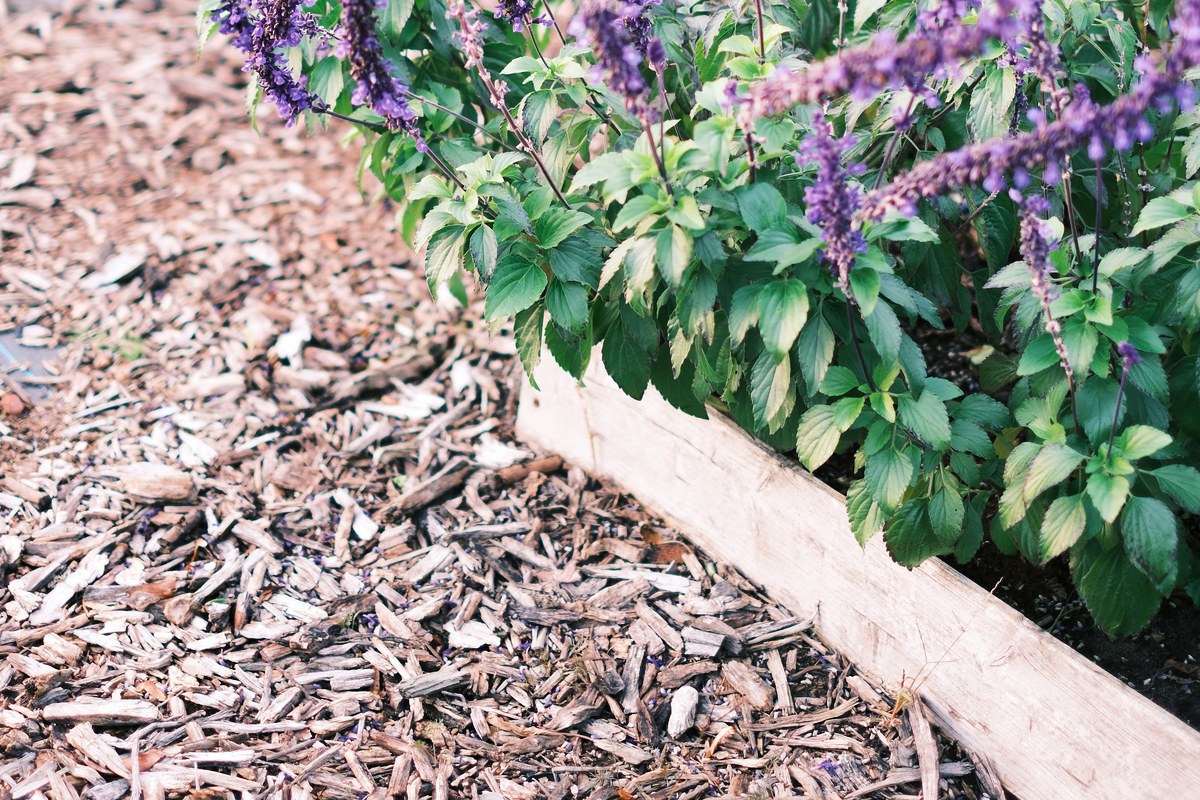
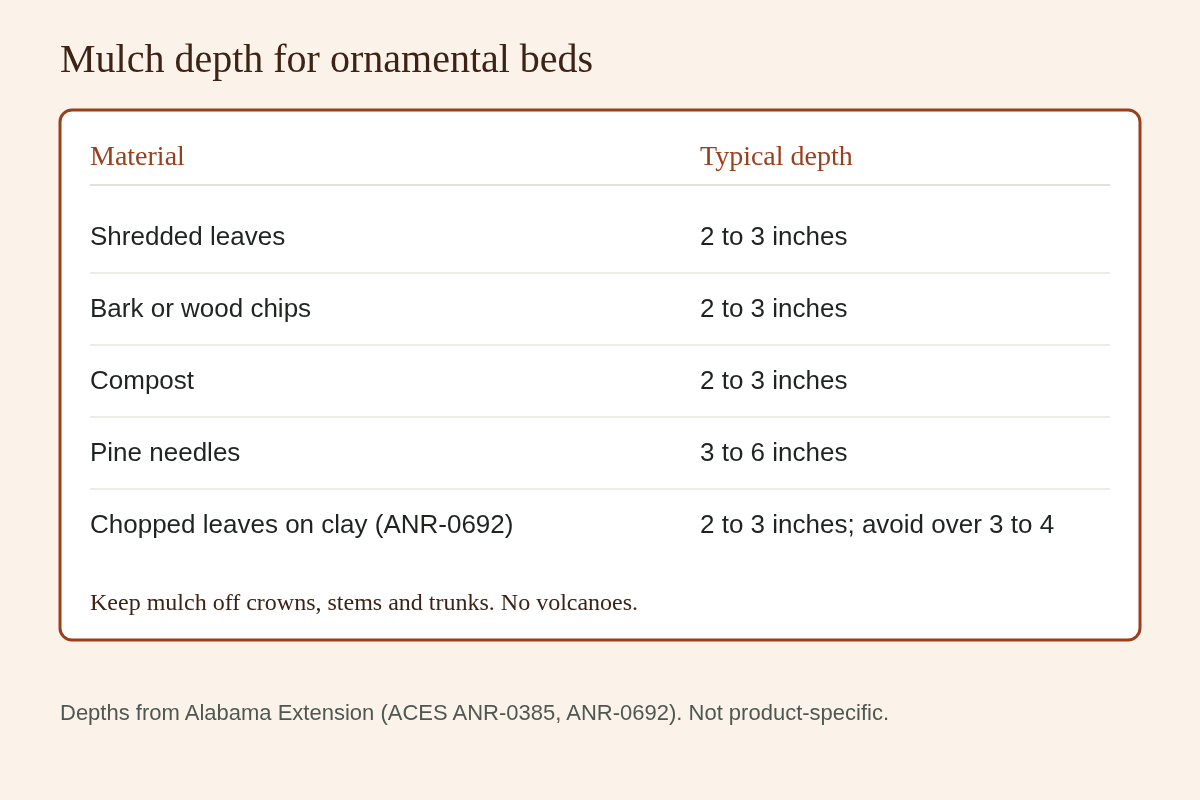
ANR-0385 lists typical depths: pine bark, wood chips, compost, and shredded leaves about 2 to 3 inches; pine needles about 3 to 6 inches. On clay, ANR-0692 limits chopped leaf mulch to about 2 to 3 inches. Deeper than 3 to 4 inches risks oxygen depletion. UNP-2178 adds about two inches on new perennial plantings, off crowns.
This weekend:
- Pull weeds and spent annuals.
- Cut a clean edge with a spade or edger.
- Rake and thin old matted mulch before topping.
- Apply fresh mulch at the depth for your material: shredded leaves, bark-type mulch or wood chips.
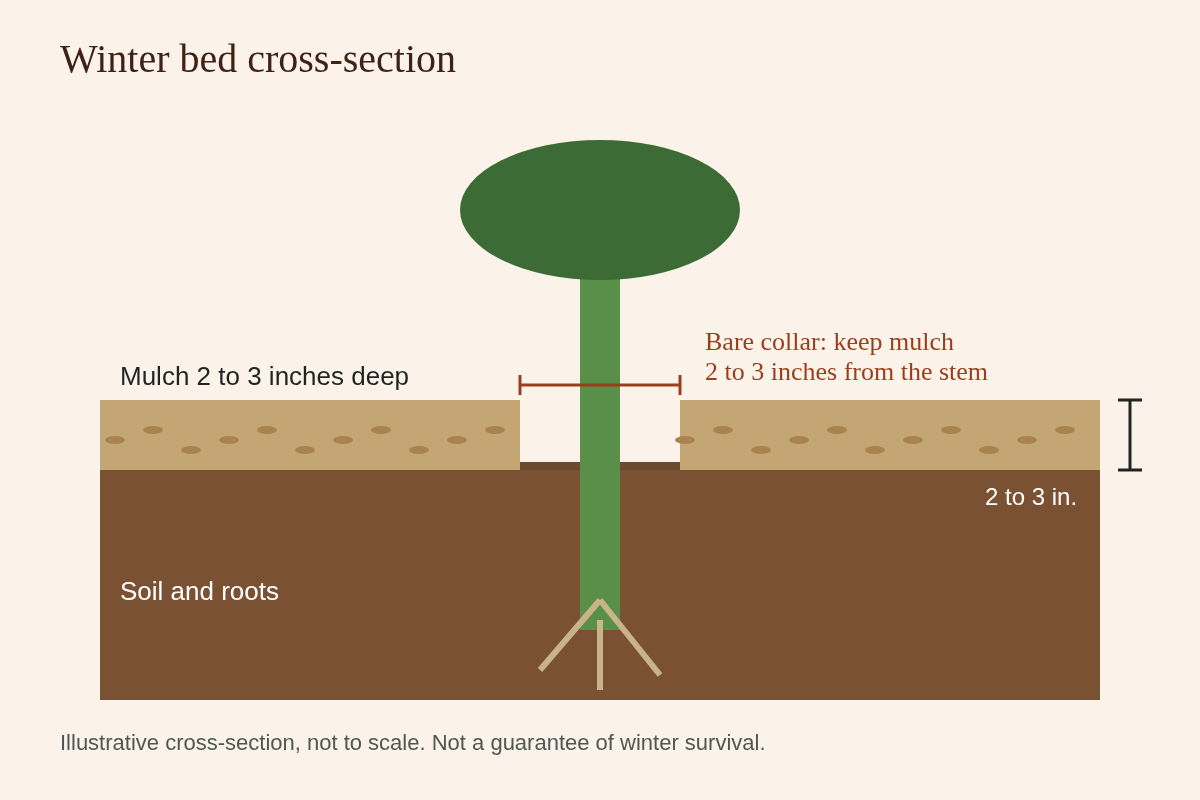
- Keep mulch off crowns, stems, and trunks. No volcano mulching.
- Water in if the bed is dry. Keep wood chips away from bare foundation walls where termites are a concern (ACES).
Winter roots, summer moisture
Mulch helps protect roots and buffer freeze-thaw swings; it does not guarantee every shrub survives a hard freeze. The same layer holds summer moisture and cuts weed pressure next year. Worth the wheelbarrow time now.
Pair with leaves and planters
Shredded leaves from drought early drop or a compost pile can top-dress beds when depth stays in range. No beds? Fall condo planters and move pots before hard freeze cover entries. Thin fescue resting this fall? Missed the Mid-South Fescue Window? Do This Instead pairs with bed work while you wait for next year’s seed window. Raised beds on a small yard follow the same edge-and-mulch discipline.
This weekend
- Edge the worst bare ring on the front.
- Thin old mulch; top to sourced depth for your material.
- Clear crowns and trunks. No volcanoes.
- Stage shredded leaves or bark-type mulch before the next cold snap.
- Add mulch ornamental beds for winter curb on your YardSeasons calendar.
Next: Drought Dropped Leaves Early: Now What. Related: Missed the Mid-South Fescue Window? Do This Instead, Compost the Leaf Mat, Fall Condo Planters, and Move Pots Before Hard Freeze.