


































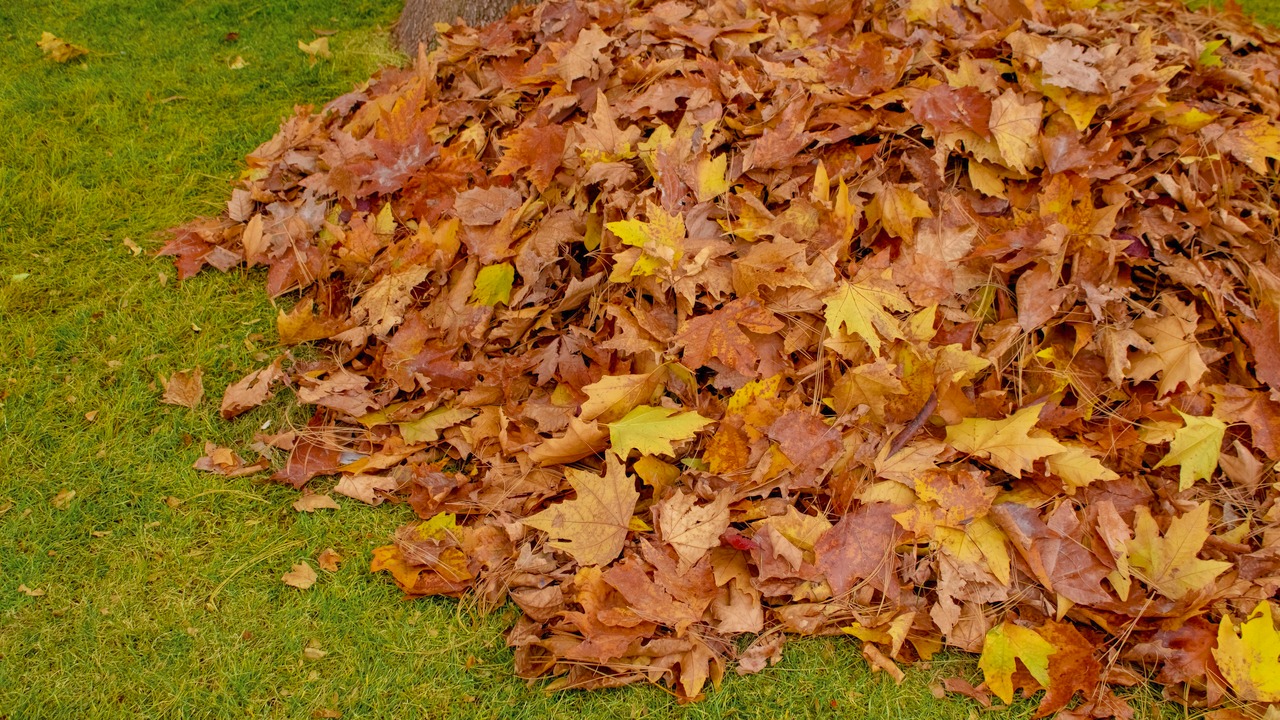
That thick, wet mat of leaves on your lawn is smothering the grass under it, and bagging it for the curb throws away next spring’s soil. Composting fall leaves in the Mid-South puts that mat in a pile instead of a bag.
Rake the mat off before the Mid-South’s first frost, pile it with your garden cleanup, and the leaves your trees dropped come back as dark, crumbly compost for your beds and planters once the weather warms.
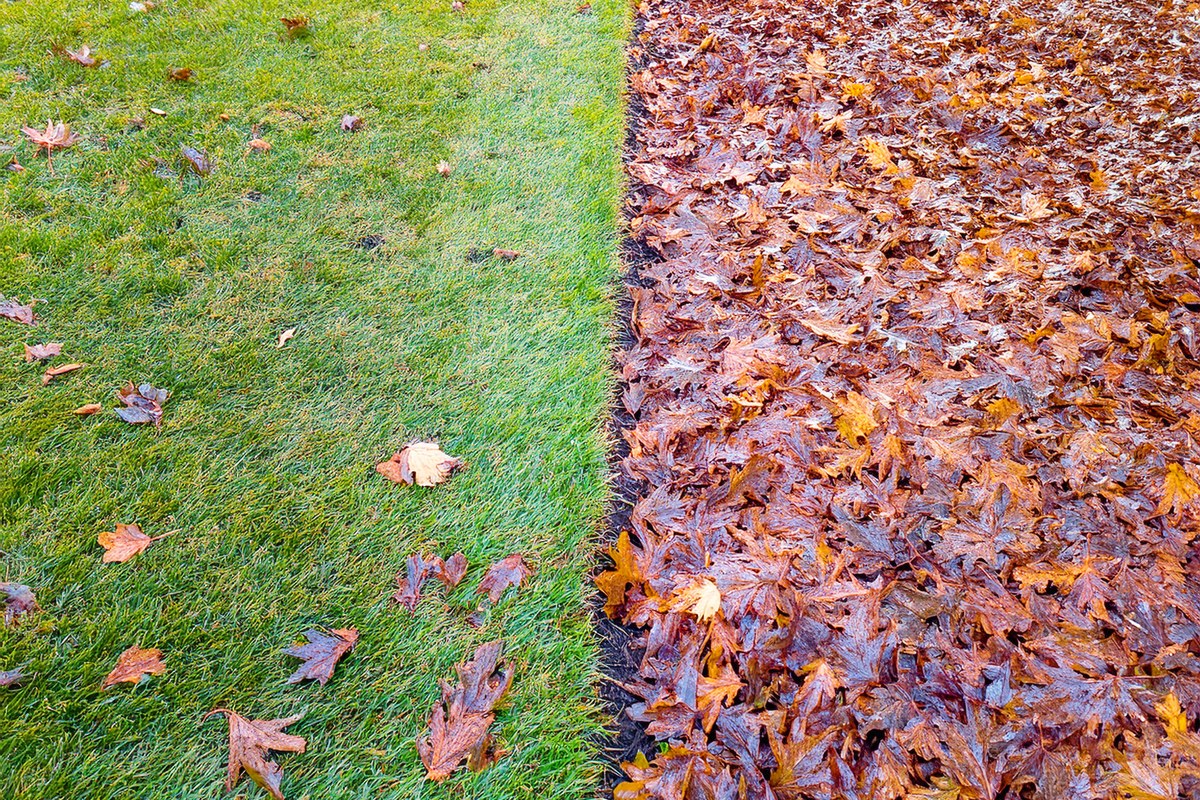
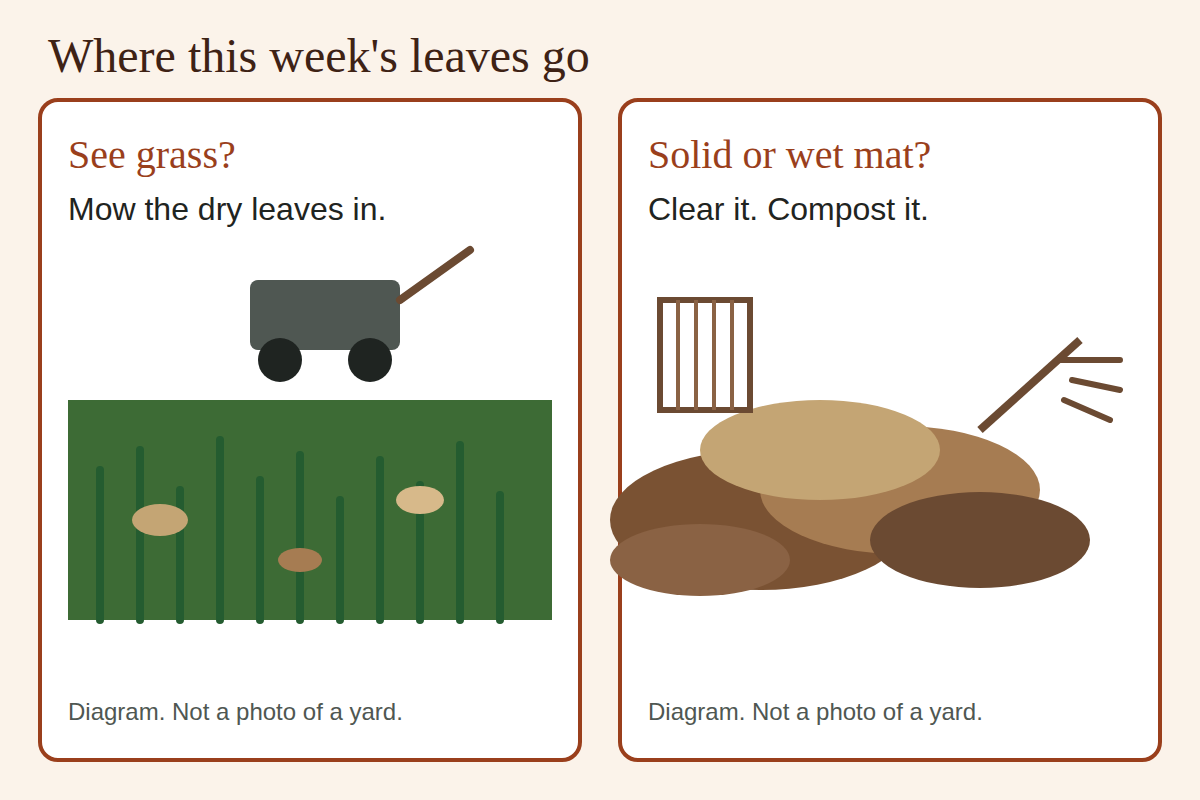
Clear the mat when you cannot see grass
University of Georgia Extension says not to mulch wet, matted leaves. Rake or blow that mat off while it is still dry enough to lift.
In Germantown, Collierville, and Belle Meade, a mature canopy can drop that mat before the Mid-South’s first frost. Franklin and Brentwood, in Williamson County, get the same job. So do Mountain Brook and Vestavia Hills, over the mountain from Birmingham.
Chop what you can before it goes in the bin. Shredding can cut the volume to as little as one-tenth.
Dry leaves are the browns
UT Extension W1391 calls dry leaves browns. Grass clippings, fresh plant scraps, and kitchen vegetable scraps are greens. A pile of leaves alone is short on nitrogen, so it breaks down slowly. Add greens as you have them.
Same rule for the weeds you pull after spraying: check the label before anything goes in the pile. Sprayed the lawn with a weed killer or weed-and-feed? Read the product label first. It’s the law, and some labels say not to compost or mulch with treated clippings.
For common lawn weed killers, University of Missouri Extension says to leave clippings on the lawn for two or three mowings before they go in the pile.
Clippings treated with clopyralid, aminopyralid or picloram are different: NC State Extension warns these can stay active in compost for years and damage tomatoes, beans and other garden plants. Keep those out entirely. If a lawn crew treats your yard, ask what they used.
Make the pile 3 feet on a side
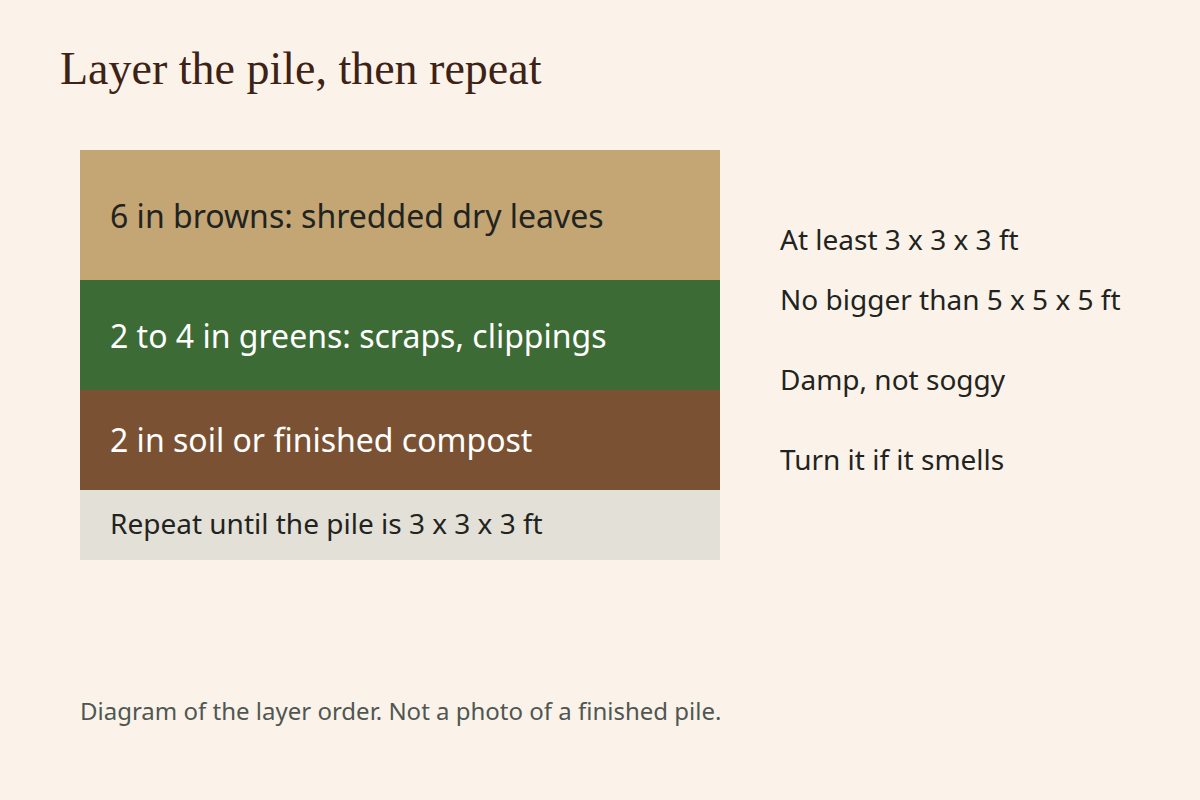
Alabama Extension calls a workable heap about 3 feet wide and 3 feet high. W1391 asks for at least 3 by 3 by 3 feet, and no more than 5 by 5 by 5. Put it in sun or mostly sun, where water is easy to reach and the spot drains.
Keep the pile off wooden buildings and off tree trunks. Alabama Extension says wood in contact with compost may decay.
Layer a batch pile the way W1391 describes:
- Six inches of browns — your shredded leaves.
- Two to four inches of greens.
- Two inches of soil or finished compost, to add microbes.
- Repeat until the pile is at least a cubic yard.
Keep it damp enough to clump when squeezed, but not drip (W1391). If it smells, turn it. Alabama Extension ties strong odors to too little oxygen, too much nitrogen, or too much water.
Whole leaves with no turning can take about two years. Shred them and turn the pile monthly if you want it sooner. W1391 says a well-built batch can finish in four to eight weeks, and a pile you keep adding to can take 12 to 18 months.
Leave these out
W1391 keeps meat, cheese and other fats out of a backyard pile because they attract scavengers.
W1391 says skip animal manure in a small pile that will go on fruits or vegetables. A home pile usually does not stay hot long enough to handle that risk. The same publication says items labeled compostable for commercial systems often do not break down in a home bin.
Weed seeds are a separate problem. W1391 says weed seeds are best destroyed at 145°F, and a home pile often runs cooler. Pulled weeds that are setting seed stay out unless you have measured that heat.
Tape the card to the bin
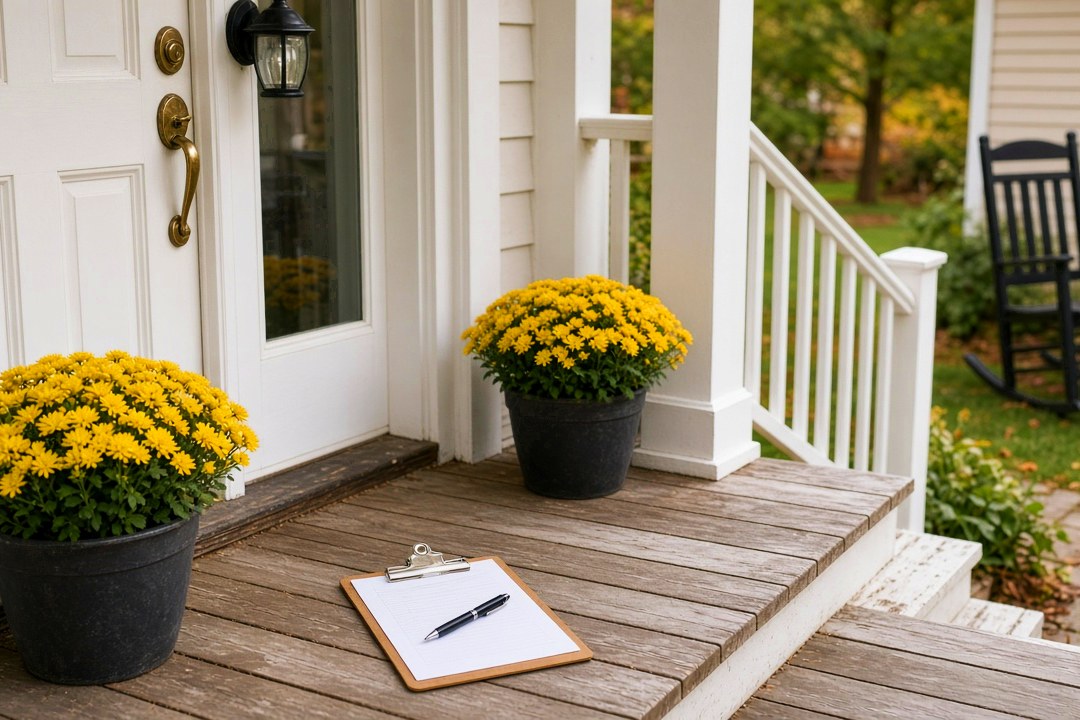
The card is the short list: what goes in, what stays out, the size, and the layer order. Print it and tape it where anyone in the house can read it before they dump a bucket in.
This weekend
- Walk the thickest patch. Grass showing on a dry day? Mow in. Solid or wet? Rake it up.
- Shred the dry leaves before they go in the bin.
- Start the 3-by-3-by-3-foot pile: browns, greens, a layer of soil.
- Keep it off wooden walls and tree trunks.
- Print the bin card and tape it on.
- Leave out seed-heads, meat and dairy. Use herbicide-treated clippings only as the label allows, and never ones treated with clopyralid, aminopyralid or picloram.
Next: Pull or Spray Fall Weeds? Often Both: the weeds you pull stay out of this pile unless it has been hot enough.