
































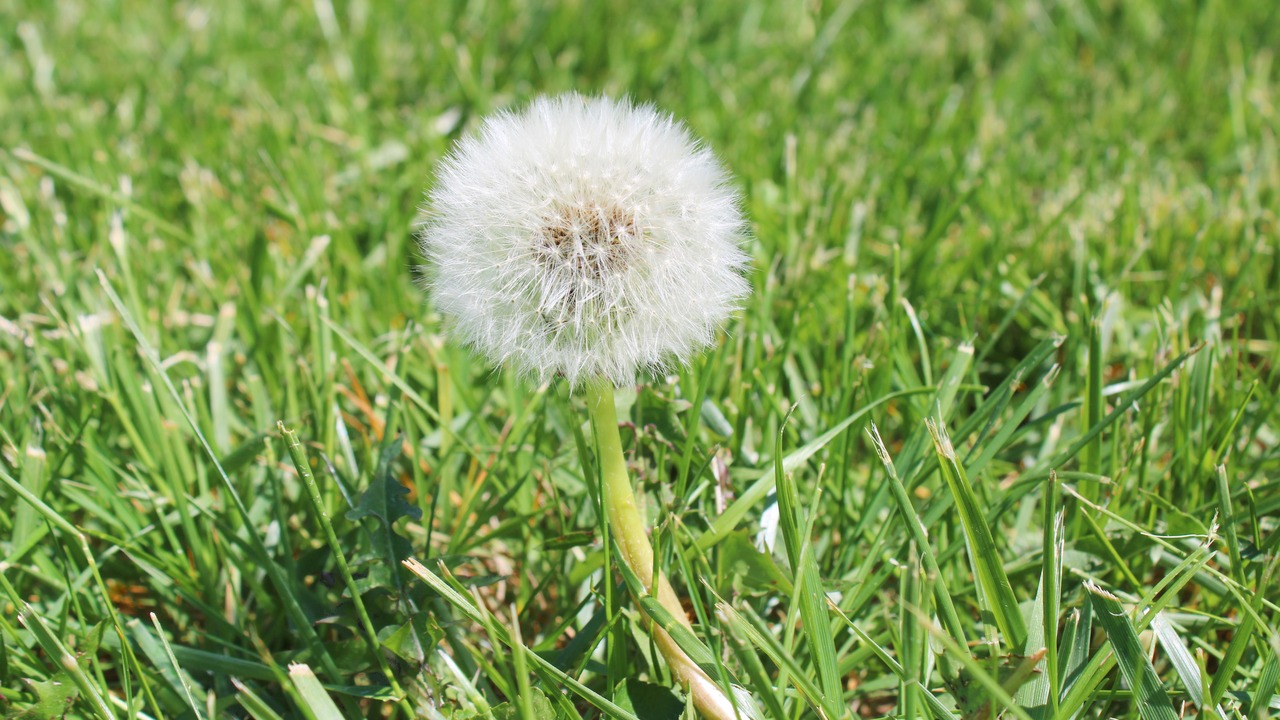
A handful of weeds is a pulling job. A lawn filling with winter weeds is a different job. In a Mid-South fall you often do both: pull what you can grab, and use a product only where the label says it belongs on your grass.
Often both, after you name the grass
Start with which grass you have. Bermuda and zoysia are heading dormant. Tall fescue is growing, and it may have been seeded from late August through mid-October.
The product has to match that grass. Choose it by what the label says to use it for. If the label does not list your grass, it does not go on that lawn.
Pull the few you can get
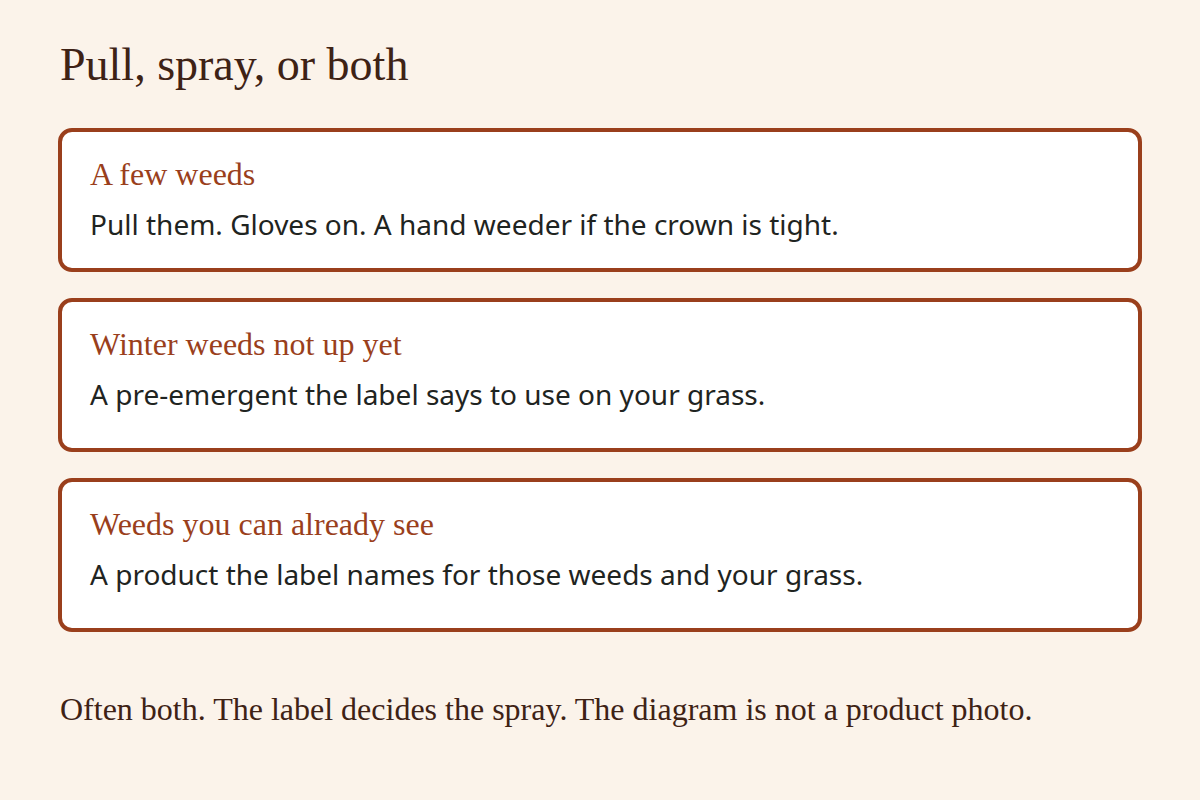
A few weeds in a bed edge, a crack, or a thin spot come out by hand when the soil is moist enough to give up the crown. That is general practice. A hand weeding tool helps when the crown sits tight. Gloves on.
Kids can pull the easy ones in the beds. They stay off any lawn you have just treated, for as long as the label says.
Pulled weeds that are flowering or setting seed stay out of the compost pile unless you have measured 145°F in that pile. UT Extension W1391 says that is the temperature where weed seeds are best destroyed, and a home pile often runs cooler.
Stop winter weeds before they sprout
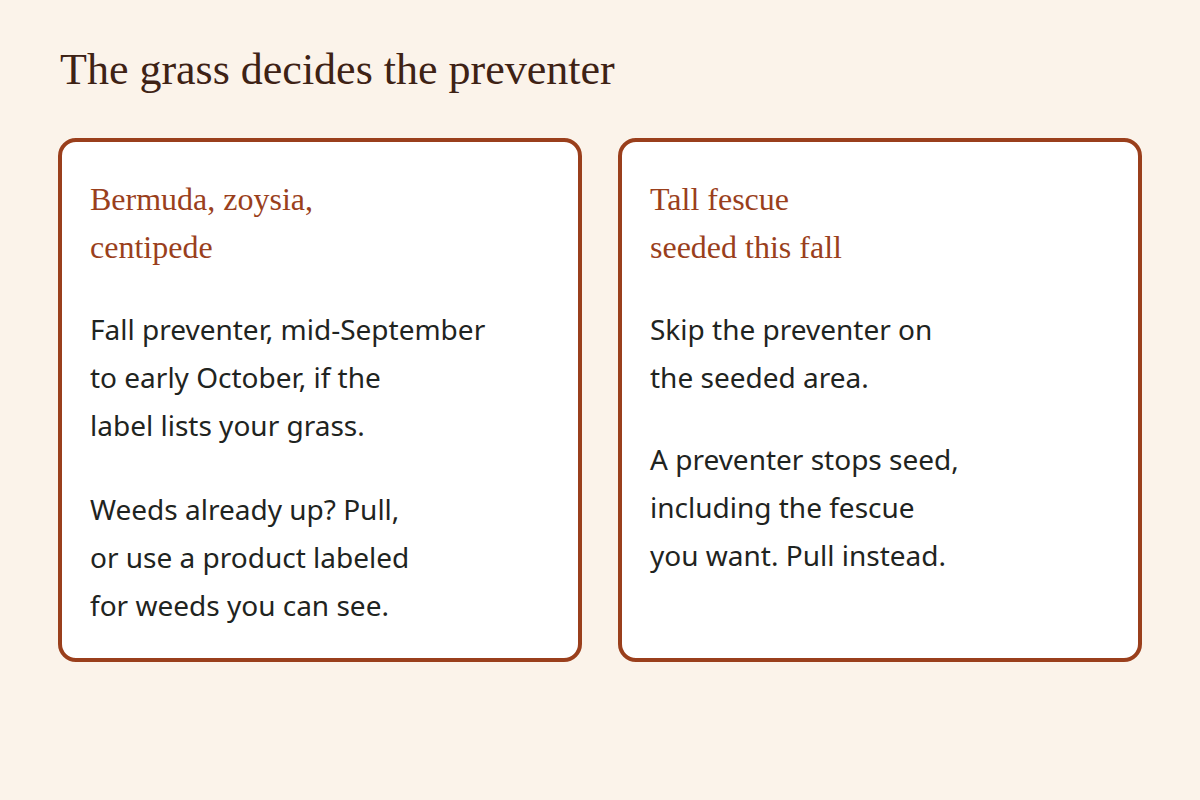
Alabama Extension describes southern lawns of bermudagrass, zoysiagrass, and centipedegrass going dormant while winter weeds stay active. Burweed, annual bluegrass, and chickweed are the ones they name. A pre-emergent herbicide is the tool they point to, applied in mid-September or early October.
That window is the same job in Mountain Brook and Vestavia Hills, over the mountain from Birmingham, as it is in Franklin and Brentwood. Germantown and Collierville get it too.
If those weeds are already up, a preventer will not erase them. A pre-emergent is for weeds that have not sprouted. Pull the ones you can see, or use a product the label says to use on those weeds and on your grass.
Skip a preventer on any area you are seeding. A preventer is there to stop seed, including tall fescue that went down in that late-August to mid-October window.
Alabama Extension also notes that overseeding a dormant bermuda makes weed control harder, because few products are labeled for both the bermuda and the ryegrass. If you overseeded, pull. Do not assume a preventer is allowed.
Spray only the use the label names
Two different products, two different jobs:
- A pre-emergent herbicide the label says to use on your grass, to stop weeds before they sprout.
- A herbicide the label says to use on your grass for weeds you can already see.
The label names the grass, the weeds, how much, and how long people and pets stay off. Follow that. Use it only for a job the label lists.
A sprayer is only for a product the label tells you to apply as a liquid. A granular product does not need one.
If a crew will spray for hire in Tennessee, weed control is pesticide work and needs a TDA pest control charter. The lawn crew guide has the questions to ask before you hire that out.
This weekend
- Name the grass. Bermuda, zoysia, and centipede are one plan. Tall fescue you seeded this fall is another.
- Pull the few weeds you can get while the soil gives up the crown. Gloves on.
- On a warm-season lawn, check whether you are still inside the mid-September to early October preventer window, or whether the weeds are already up.
- On tall fescue seeded this fall, skip the preventer on that area.
- If you use a product, read the label for your grass and for those weeds. Stay off as long as the label says.
- Keep seed-heads and treated clippings out of the compost bin until you know they belong.
Next: Raised Beds on Clay: Build in October: once the weeds are out, October is the weekend to build that bed on clay.